

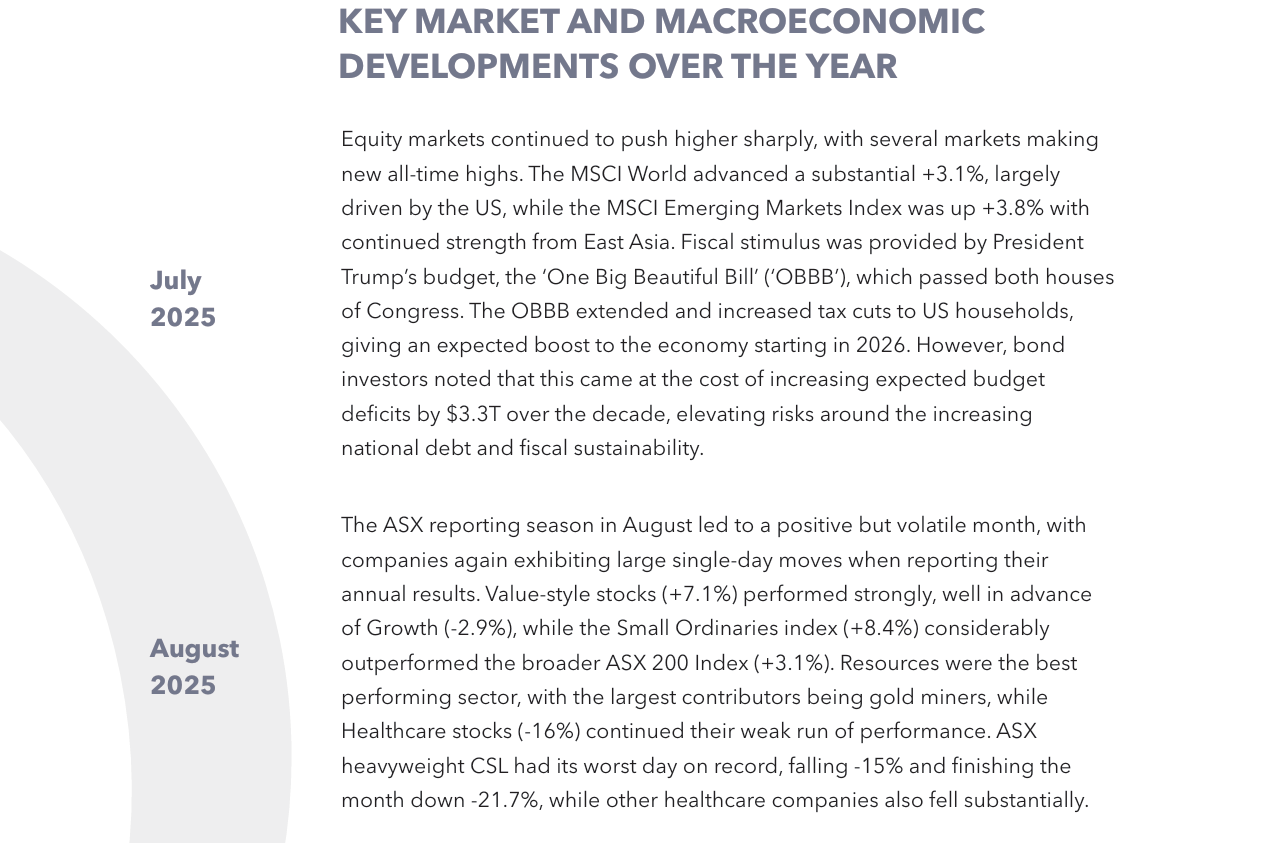
2026 Financial year in review
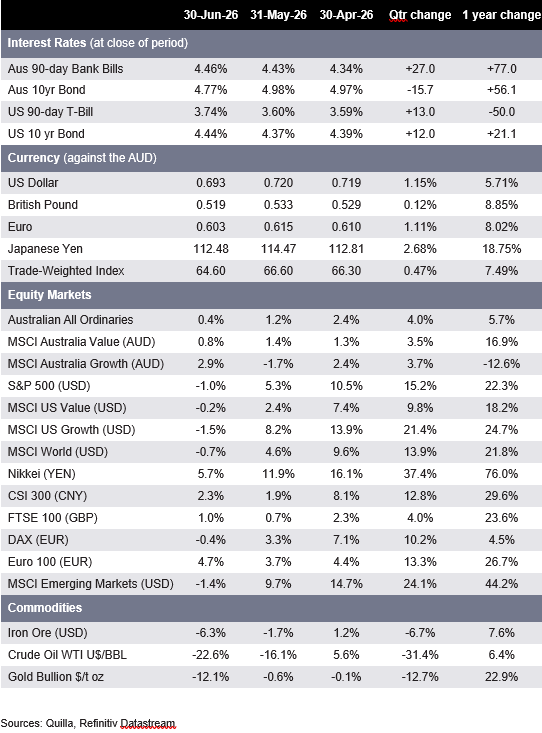
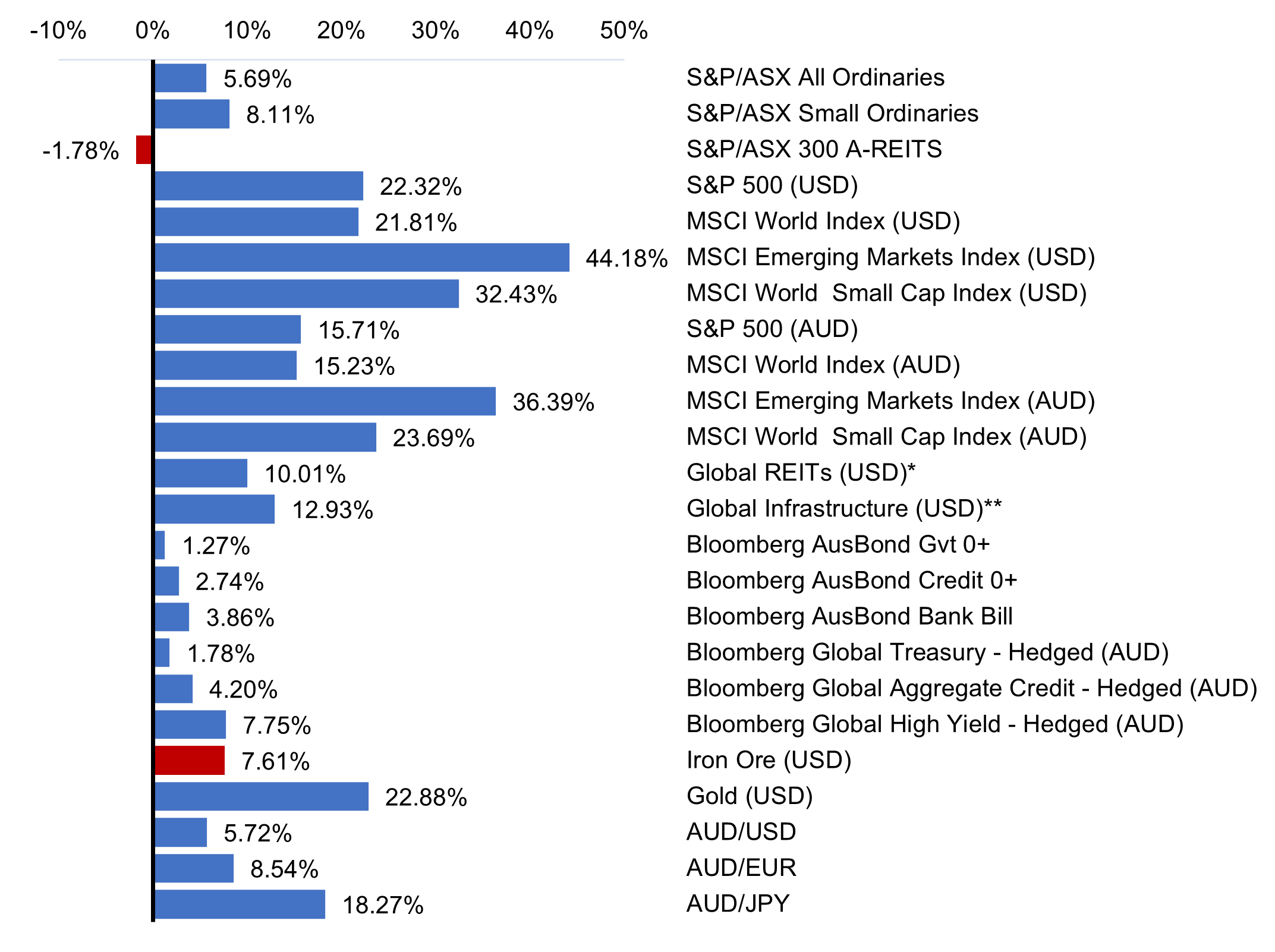
The Financial Year 2026 was a strong year for global equities, driven by beneficiaries of the artificial intelligence (AI) infrastructure build-out that favoured US technology companies and select emerging markets. Australian equities lagged, held back by a scarcity of listed AI beneficiaries.
The US Federal Reserve (Fed) cut interest rates through late 2025 and has held since. The Reserve Bank of Australia (RBA) shifted swiftly from a cut to the cash rate in the second half of 2025 to three 25 basis point hikes in the first half of 2026 as inflation remained persistent.
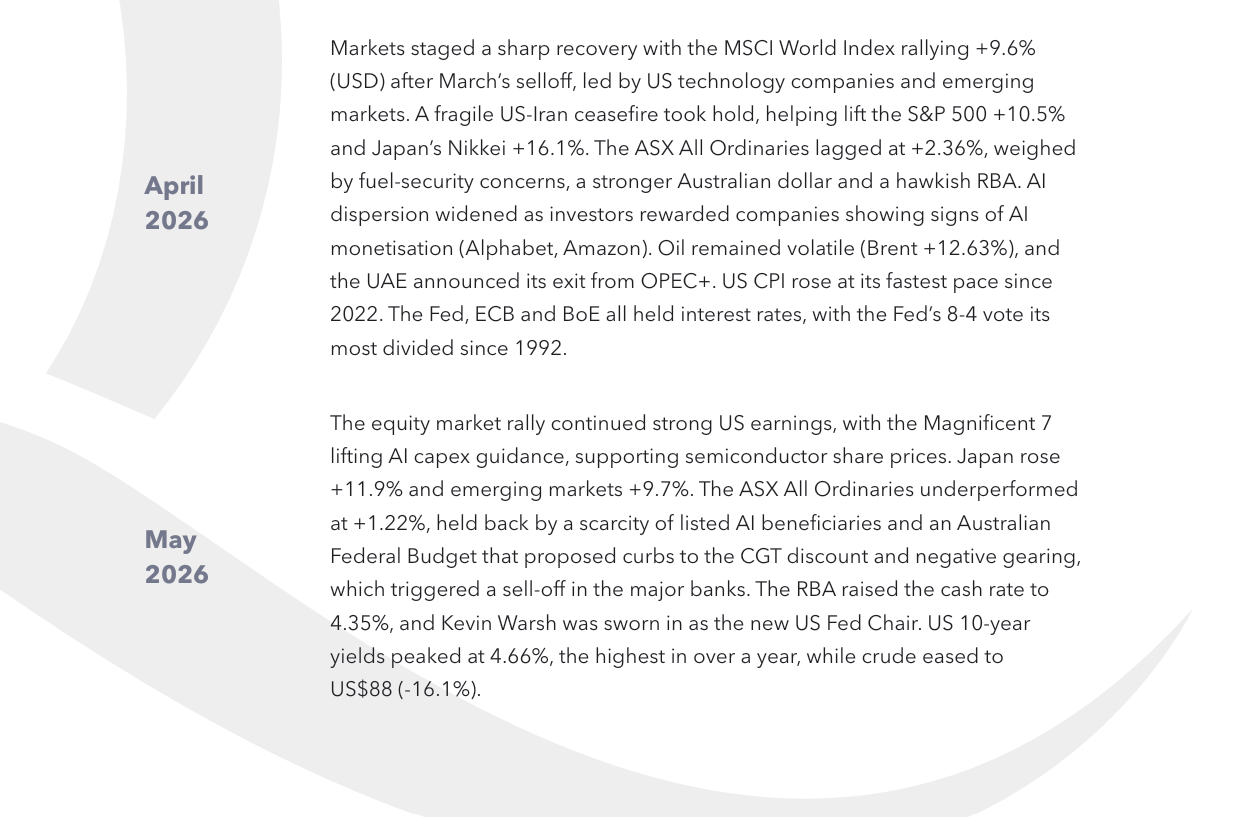
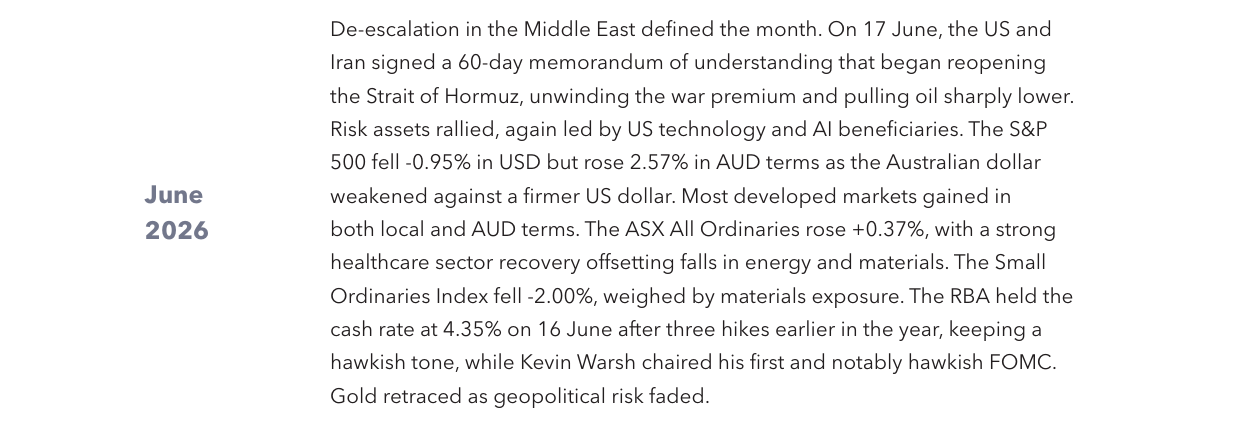
The sharpest market moves came in March 2026, when the US-Israeli conflict with Iran and a closure of the Strait of Hormuz drove oil above US$100. This triggered a broad global equity market selloff, before a ceasefire sparked a sharp recovery in April, solidified by the signing of a memorandum of understanding in June.
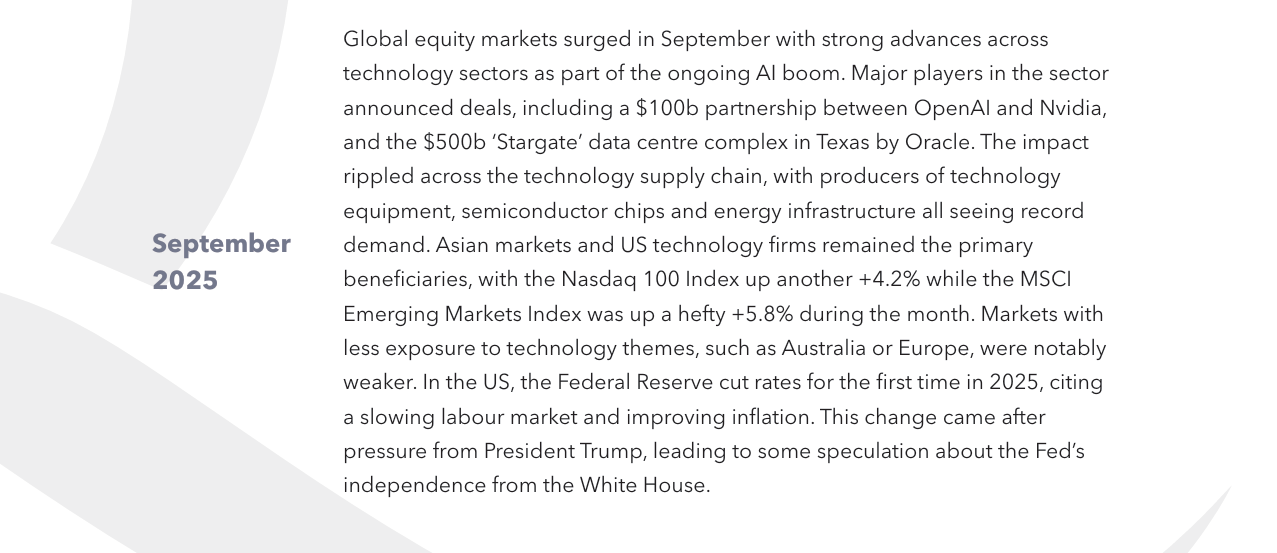
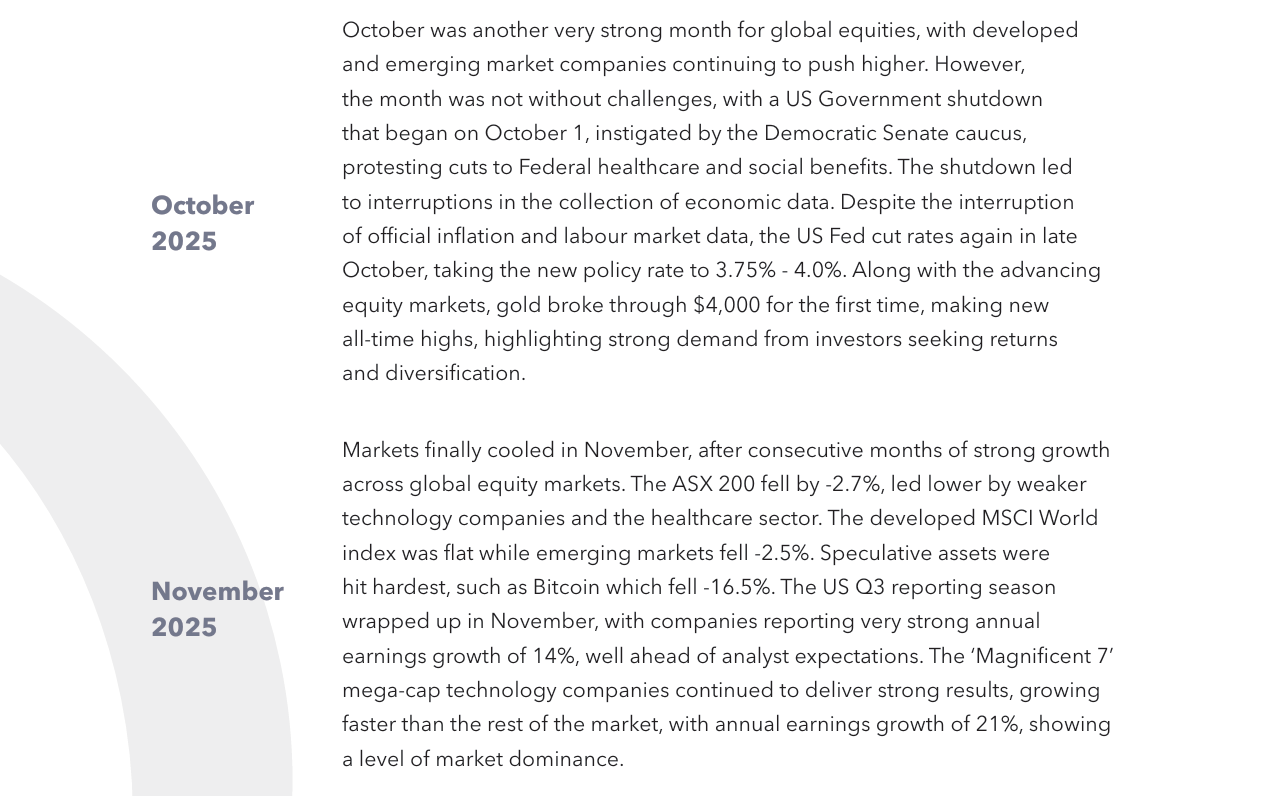
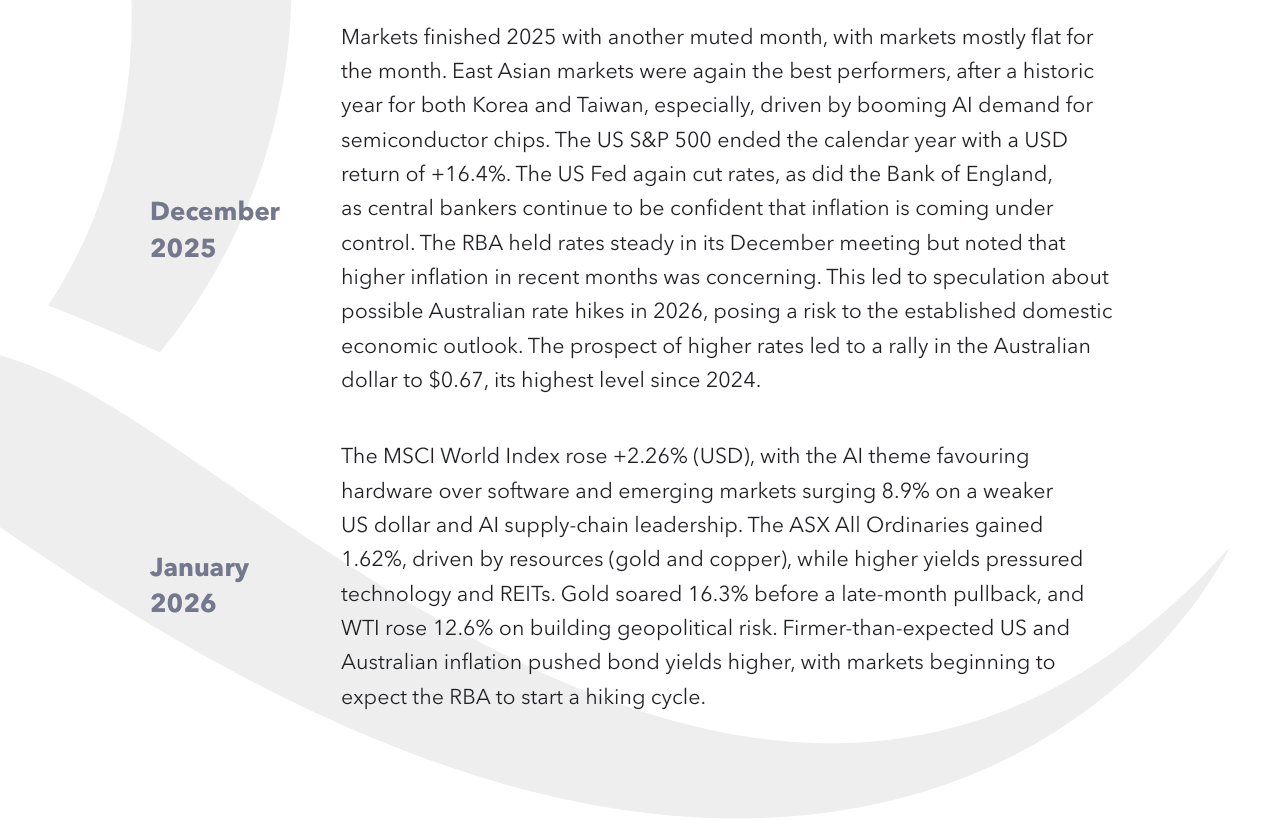
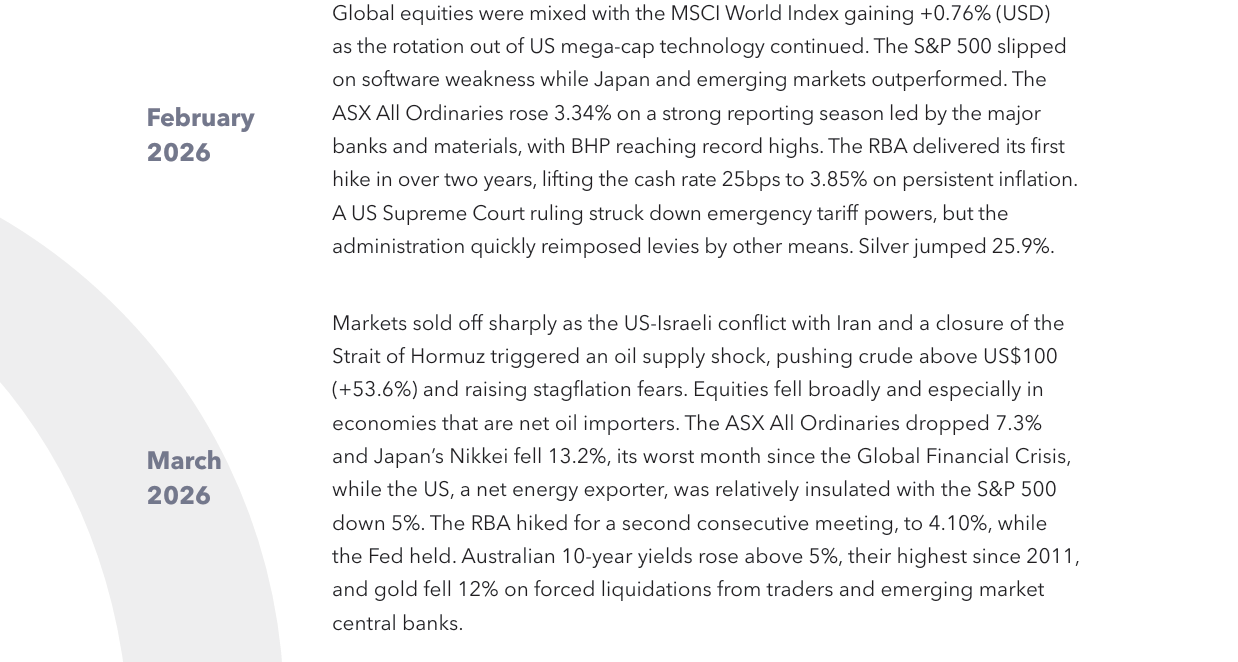
Selected Maret Returns
Looking ahead to the 2027 Financial Year
We remain constructive on the global economic and equity market outlook. Several supportive themes should continue to drive economic growth and corporate earnings. Risks are not absent, however, and could lift short-term volatility across both the global and domestic economies.
Geopolitical uncertainty
The geopolitical environment remains fragile. Economic risks in the Middle East have eased, but the ceasefire between the US, Israel and Iran is still shaky. Both the US and Iran continue to
signal a desire to end the conflict, each seeking a favourable outcome. The November US midterm elections add further impetus, given the war’s unpopularity across the political spectrum. Markets have historically performed strongly after US midterms, though they will stay sensitive to renewed escalation. Geopolitics is unpredictable by nature, but such conflicts typically have only short-term market impacts. We remain alert to any escalations material enough to move markets.
Structural themes
The AI infrastructure build-out remains the dominant market theme, driven by record and rising capex from global technology companies competing to build the most advanced AI systems. This spending has underpinned both economic growth and equity returns. We expect it to keep growing and to broaden across industries, funding both infrastructure and the deployment of AI tools and services. Benefits should extend to companies that adopt AI to lift sales and operating efficiency, supporting earnings growth.
Other themes support the multi-year outlook. Geopolitical fragmentation has permanently altered the global security architecture, shifting defence from cyclical to secular growth. Reshoring of key
industries is accelerating as nations reduce reliance on others for critical industry inputs. Infrastructure and the energy transition will require substantial capital to expand capacity and improve grid efficiency. These are among the most impactful themes, but technological advances across sectors should provide a broader tailwind to innovation and growth.
Global economic growth
Our base case remains constructive but is best described as a “Below Trend Growth” scenario. The US should retain its growth advantage among developed markets, while others experience more modest growth trajectories. The Australian economy is expected to slow towards a modest pace in the year ahead, but recession remains a low probability. Structural factors continue to sustain global growth, but consumer spending will likely stay subdued despite relatively stable labour markets.
Fiscal spending across major economies should continue to provide support, though the boost from measures such as the Trump administration’s “One Big Beautiful Bill” will likely fade into 2027. Domestically, government spending is also expected to taper in impact, given it already sits at historically extreme levels. A softening housing market will add a further drag on the local economy.
Inflation, interest rates and central bank policies
Global monetary policy has turned notably cautious as central banks manage persistent above-target inflation and shifting growth expectations. Normalising oil prices have eased near-term price
pressures, but central banks are likely to stay cautious while underlying inflation holds above target. AI is expected to be deflationary over the longer term, but in the near term, the investment cycle is driving up demand in key areas, which will place some upward pressure on prices.
We believe the RBA is close to the end of its hiking cycle: inflation appears to be peaking while growth softens, and business and consumer conditions deteriorate. In the US, a new Fed Chair has added uncertainty to the policy path, striking a more restrictive tone than expected. These dynamics have led to a weakening of the Australian dollar (AUD) recently. We remain neutral on the AUD, as it is trading near longer-term fair value.
Fixed income markets
Global bond markets will likely stay range-bound as they weigh inflation against growth pressures. However, domestic government bonds may become more attractive as rising economic risks prompt the RBA to cut interest rates. Nominal yields within domestic credit markets are still attractive on an absolute and relative basis compared to both term deposits and global credit yields with lower risk given wider credit spreads. We retain a bias towards domestic credit within fixed income allocations.
Equity markets and corporate earnings
Global equities have been buoyed by strong earnings and improving forward guidance, particularly from AI beneficiaries. Earnings growth should broaden across industries and regions, widening the sources of equity returns. This durability should support equities over the next 12 months, though a key watch point is whether returns are generated from the significant AI investments. The main risk for global equities is that elevated expectations, if missed, trigger volatility.
Current valuations are fair based on earnings expectations, and the market is not applying excessive valuation multiples even to strongly growing sectors. We are noting pockets of risk where investors have built up significant leverage in sectors such as Semiconductors, Aerospace and Defence.
Domestically, a softer economy will continue to weigh on consumer-facing businesses, while falling house prices and activity pressure the banking sector. We expect Australian earnings growth to hold up but remain below global peers. Australian equities remain attractive for income-oriented portfolios given higher dividend yields relative to global markets.
Investment implications
Ultimately, we see a supportive backdrop for financial markets supported by powerful structural tailwinds and broadening corporate earnings. While the path ahead will likely include pockets of short-term volatility stemming from shifting earnings expectations, monetary policy shifts, geopolitical fragility, and a softer domestic economy, these risks can be effectively managed. By maintaining investment discipline and ensuring robust portfolio diversification, we remain well-positioned to navigate these crosscurrents and capture long-term market opportunities.
Major market indicators & portfolio performance